
The kitchen works harder than any other room in the house. It deals with spills, dropped pans, muddy boots, pets and constant foot traffic, and it still needs to look good. That is why more UK homeowners are choosing a resin kitchen floor over tiles, laminate or vinyl.
Resin isn't right for every home, though. This guide gives you an honest view of the advantages, the drawbacks and what the installation involves, so you can decide with confidence.
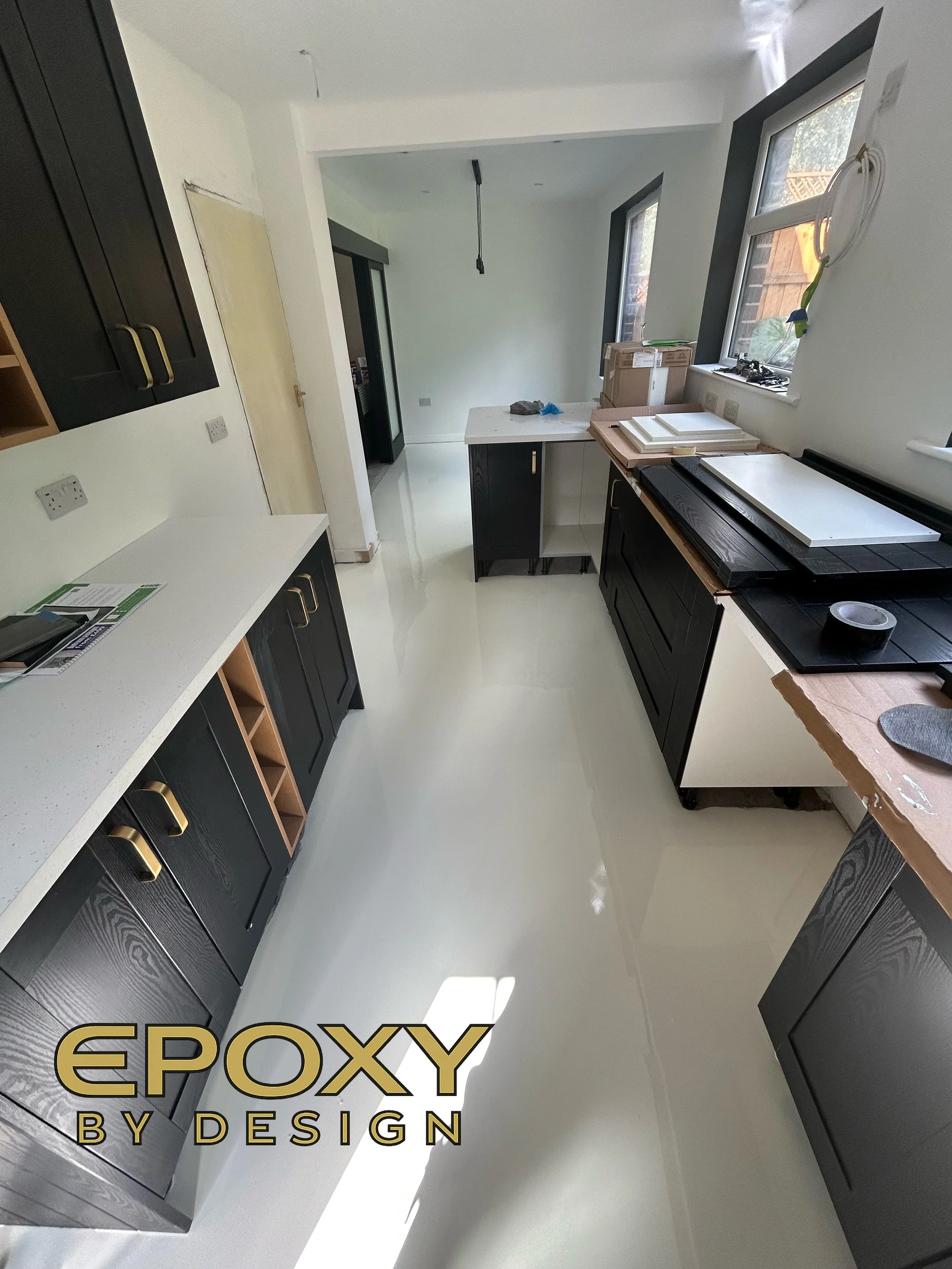
The Pros of a Resin Kitchen Floor
Seamless and hygienic
Resin is poured as one continuous surface with no grout lines or joints. Grout is where dirt, grease and bacteria build up in a tiled kitchen, so a seamless floor is much easier to keep clean. That is the reason commercial kitchens and food businesses have used resin for decades.
Highly resistant to spills and stains
A properly sealed epoxy kitchen floor is non-porous. Wine, oil, coffee and sauces sit on the surface and wipe away, instead of soaking in as they can with natural stone or unsealed grout.
Durable under daily use
Resin is tough enough for chairs being pulled in and out, dropped utensils and heavy appliances. It won't crack the way an individual tile can when a heavy pan lands on it.
Endless design options
You can choose from solid colours, subtle stone effects, flake finishes or a bespoke metallic resin design. Gloss, satin and matt topcoats let you decide how reflective the floor looks.
Works with underfloor heating
Resin is thin and conducts heat well, so it pairs well with underfloor heating in kitchen extensions.
Easy to clean
A soft mop with warm water and a pH-neutral cleaner is usually all you need. There's no regrouting, sealing or sanding. Our resin floor maintenance guide covers the details.
The cons of a resin kitchen floor
Higher upfront cost than basic flooring
A professionally installed resin floor costs more than budget vinyl or laminate. Its lifespan and low maintenance often balance this out over time, but it is a premium choice.
It is a hard surface
Like tiles and stone, resin is hard underfoot. Glass or china dropped on it is likely to break, and some people find standing for long periods less comfortable than on cushioned vinyl. A kitchen mat by the sink solves this for most homeowners.
Gloss finishes can show scratches and dust
A high-gloss floor looks striking but shows fine scratches, crumbs and dust more readily. Satin or matt topcoats hide everyday wear far better in a busy family kitchen.
It can be slippery when wet
A smooth glossy finish can be slippery with water or oil on it. Adding a fine anti-slip aggregate to the topcoat improves grip and is something we often recommend for kitchens.
Preparation and downtime
Resin needs a properly prepared subfloor, and the kitchen is out of use while the floor is laid and cured. Planning around this is part of the project.
Installation is not a DIY job
Good results depend on moisture testing, surface preparation, mixing ratios and timing. DIY kits rarely match a professional finish, and failures often come down to poor preparation. Our post on why floor coatings peel and bubble explains the most common causes.
What to expect during installation
Every project is different, but most domestic kitchen installations follow these stages.
Survey and moisture testing. We check the subfloor's condition, levels and moisture content. Damp screeds must be dealt with before any resin goes down.
Preparation. Existing flooring is removed and the surface is mechanically ground, cleaned and repaired.
Priming. A primer bonds the resin system to the substrate.
Body coat or design layer. The main resin layer is applied, including any metallic or decorative effect.
Topcoat. A protective topcoat is applied in your chosen finish, with anti-slip aggregate if required.
Curing. Light foot traffic is usually possible after about 24 hours. Appliances and heavier use return after a few days, once the resin has cured enough.
Before or after the kitchen is fitted?
Pouring the resin before the units go in gives a continuous floor underneath them, which makes future kitchen changes easier. Fitting the kitchen first uses less material. We'll talk through the right order with you and your kitchen fitter.
Is a Resin Kitchen Floor right for you?
A resin floor is a great fit if you want a seamless, modern look, easy cleaning and a floor that lasts. It suits open-plan kitchen extensions, family homes with pets and anyone who is tired of scrubbing grout. If you want a soft, cushioned floor or the lowest possible upfront cost, another material may suit you better.
To see finished results, look at our Holmfirth kitchen transformation and our Stockport kitchen and hallway project.
Frequently Asked Questions
How long does a resin kitchen floor last?
With proper preparation, installation and care, a resin kitchen floor can last for many years. The topcoat can be refreshed if it starts to look worn, without replacing the whole floor.
Can resin be laid over kitchen tiles?
Sometimes. If the tiles are firmly bonded and the surface is properly prepared, resin can be applied over them, but the grout lines usually need filling and levelling. A survey will confirm whether this is possible.
Does resin flooring smell during installation?
Some resin systems give off an odour during application and curing. We use low-odour products where possible and ventilate the space well.
Can I have resin in a kitchen with pets?
Yes. Resin is easy to clean and resists stains, which makes it popular with dog owners. A satin or matt finish hides claw marks better than high gloss.
Can resin flooring be repaired if damaged?
Yes. Localised chips can be repaired, and the topcoat can be recoated to refresh the whole floor.
Get Expert Advice on your Kitchen Floor
Thinking about a resin kitchen floor? Epoxy By Design installs bespoke resin kitchen floors across Leeds, Harrogate, Bradford, Manchester and beyond. Get in touch for a free consultation and quote, and we'll help you choose the right finish for the way you live.
