
Garage Floor Coating Failure: 11 Reasons It Peels, Bubbles & Flakes (And How to Avoid Them)
Few things are more frustrating for a homeowner than a garage floor coating that starts peeling, bubbling or flaking within just months of installation. It is a genuinely common complaint across the UK, particularly with DIY kits or budget installations, and it almost always traces back to a specific, entirely avoidable cause. Understanding exactly what causes coating failure helps you avoid it altogether, whether you are planning a DIY project yourself or hiring a professional installer somewhere across Leeds, Manchester or the wider Yorkshire region.
1. Inadequate Surface Preparation
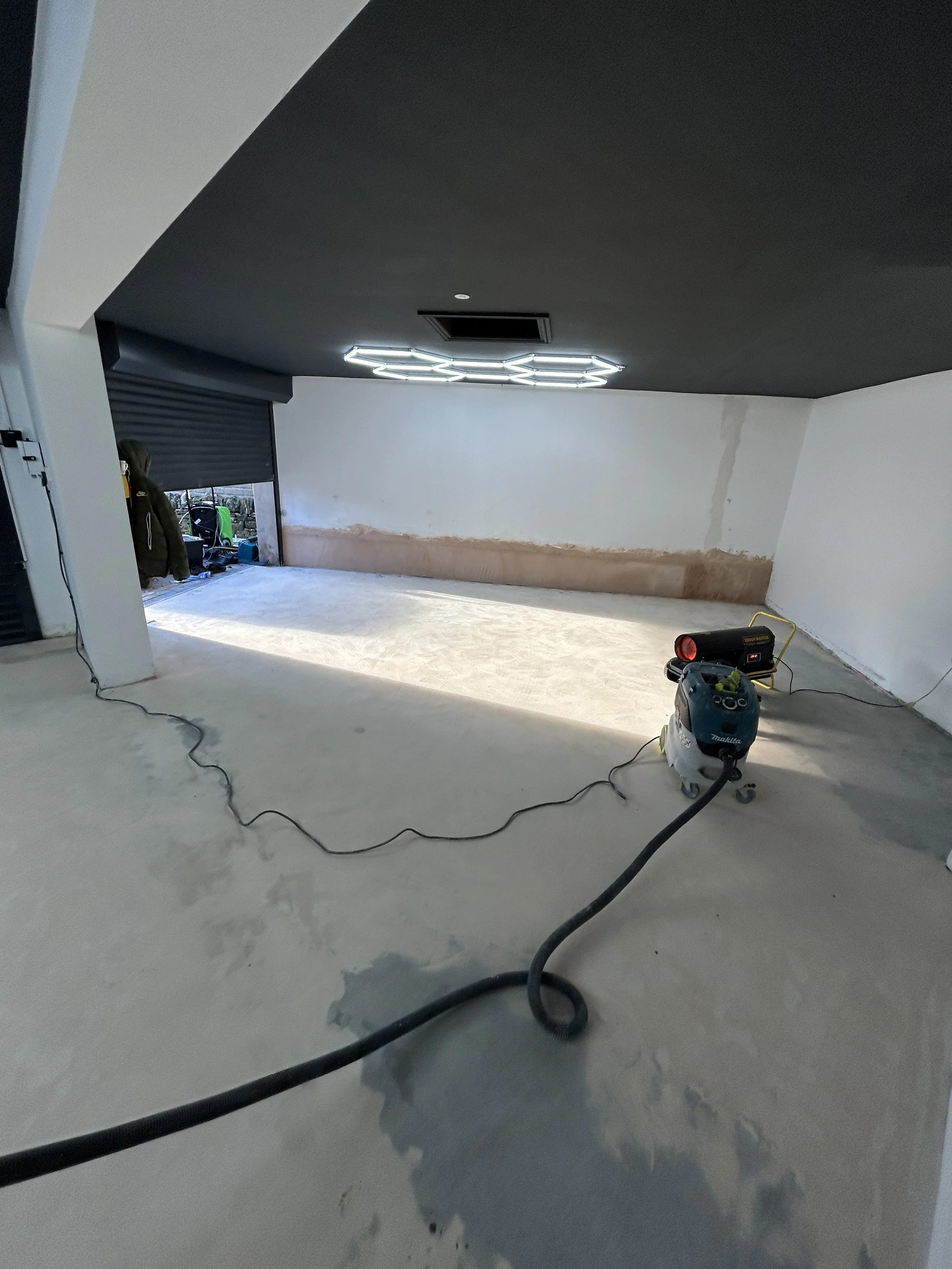
This is by far the single most common cause of coating failure. Concrete has a naturally closed surface layer that resin cannot bond to properly without mechanical preparation beforehand. Diamond grinding or shot blasting opens up the concrete pores so the resin can penetrate the surface and form a genuine mechanical bond with it. Simply cleaning or lightly sanding the surface, as many DIY approaches attempt, leaves a weak bond that fails under normal daily use within just a few months.
2. Excess Moisture Within the Concrete
Concrete slabs, particularly older ones without a properly installed damp proof membrane, can hold significant moisture that gradually rises to the surface over time through a process known as vapour transmission. If resin is applied over a slab with high moisture content, vapour trapped beneath the coating eventually pushes it away from the concrete surface, causing bubbling or in more severe cases complete delamination. Experienced professional installers carry out proper moisture testing before application specifically to catch this issue before it becomes a problem.
3. Applying Coating Over Existing Contaminants
Oil stains, old sealers, curing compounds and general dust left on the concrete surface all prevent proper resin adhesion from occurring. Even invisible residues, such as traces of a curing compound applied when the concrete was originally poured, can cause a new coating to fail in patches across the floor. Thorough mechanical preparation genuinely removes these contaminants rather than simply cleaning over the top of them.
4. Incorrect Mixing Ratios
Epoxy and polyaspartic systems both rely on precise ratios between the resin and hardener components to cure correctly. Getting this wrong, even by a relatively small margin, results in a coating that never cures properly, remaining soft, slightly tacky, or prone to premature wear once in use. This is a particularly common issue with inexperienced DIY applications, where mixing is sometimes done by eye rather than accurately by weight or volume as specified by the manufacturer.
5. Poor Environmental Conditions During Application
Temperature and humidity during both application and curing significantly affect how a resin coating performs once finished. Applying epoxy in conditions that are too cold slows the curing process considerably and can prevent proper chemical bonding from taking place at all. Applying in conditions that are too warm, on the other hand, can cause the resin to cure too quickly, trapping bubbles within the coating or leading to poor flow and levelling across the surface. Professional installers monitor and, where possible, control these conditions carefully throughout the project.
6. Applying the Coating Too Thin
Skimping on material to save cost, or simply misjudging the correct coverage rate for a given product, results in a coating that is too thin to provide the durability it was designed for. Thin coatings wear through relatively quickly in high traffic areas, exposing bare concrete underneath and accelerating further damage to the floor.
7. Rushing the Cure Time
Every resin system has a defined minimum cure time before it can safely handle foot traffic, along with a longer period before it reaches full chemical and abrasion resistance. Driving a car onto a newly coated garage floor before it has properly cured, even if the surface feels dry to the touch, can cause soft spots, permanent tyre marks, or in worse cases complete failure in the high stress areas where the tyres make contact.
8. Using the Wrong System for the Environment
Not every resin system suits every environment equally well. A standard residential grade epoxy used in a heavy duty workshop with constant chemical exposure and significant mechanical wear will fail considerably faster than a properly specified industrial grade system. Matching the resin system to the actual, real world use of the space is absolutely essential to getting a lasting result.
9. Existing Cracks and Movement Joints Left Untreated
Cracks in the underlying concrete, if not properly repaired and, where necessary, incorporated into the design of appropriate expansion joints, will typically transfer through the new coating over time as the underlying concrete continues to move naturally. This shows up as cracking or splitting appearing in the resin surface directly above the location of the original concrete crack.
10. Poor Quality or Incompatible Materials
Not all resin products available on the market are created equal. Cheaper, lower grade materials can lack the flexibility, UV stability or chemical resistance of premium systems, leading to premature yellowing, cracking or general wear much sooner than expected. Using genuinely compatible primer, base coat and topcoat products from a properly coordinated system also matters considerably, since mixing incompatible products from different manufacturers can cause adhesion problems developing between the different layers.
11. DIY Application Without the Proper Equipment
Professional installation relies on specific specialist equipment, including industrial diamond grinders, calibrated moisture meters and proper mixing tools, none of which are typically available to the average DIY homeowner. Without this equipment, even a genuinely careful DIY attempt often falls well short of what a professional installation achieves, particularly at the crucial preparation stage that underpins everything that follows.
How to Avoid These Failures in Practice
The common thread running through almost every one of these causes of coating failure is inadequate preparation combined with inexperienced application. A genuinely professional installer brings the right equipment to site, tests properly for moisture, diamond grinds the surface correctly, repairs cracks in an appropriate way, and applies each layer at the correct thickness and within the right environmental conditions for that particular product.
If you already have a failing garage floor coating showing visible signs of peeling, bubbling or flaking, the existing coating will typically need to be fully removed before a new system can be properly installed, since applying fresh resin directly over a failing coating generally just repeats the same underlying problems all over again.
What to Ask Before Hiring an Installer
Before committing to any garage floor project, it is worth asking a prospective installer specifically how they prepare the concrete surface, whether they carry out moisture testing as standard, which specific products they use and why, and how long they expect the finished floor to last under your particular pattern of use. A confident, experienced installer should be able to answer all of these questions clearly and in detail.
Getting It Right the First Time
At Epoxy By Design, every single project begins with a proper site survey, including moisture testing where relevant to the situation, so that we can identify and address potential issues before they ever become genuine problems. We install garage floor coatings across Leeds, Manchester, York, Bradford, Wakefield, Harrogate, Wetherby, Sheffield, Nottingham, Liverpool and Stoke-on-Trent, and we are always happy to assess an existing failing floor and advise honestly on the best path forward for your specific situation.
Get in touch with our team for a free consultation if your current garage floor coating is showing any signs of failure, or if you simply want reassurance that a new installation will be done properly from the very start.
