
The Resin & Epoxy Flooring Guide
Thinking about a resin floor but not sure where to start? This guide walks you through the key decisions – from choosing between different epoxy flooring systems to working out if a metallic epoxy floor, flake finish or simple high-build coating is right for your home, garage or commercial space.
Our aim is to give you clear, honest information so you can compare options confidently, understand what affects cost and quality, and know what to look for when speaking to flooring installation contractors near me or planning a project with Epoxy By Design.
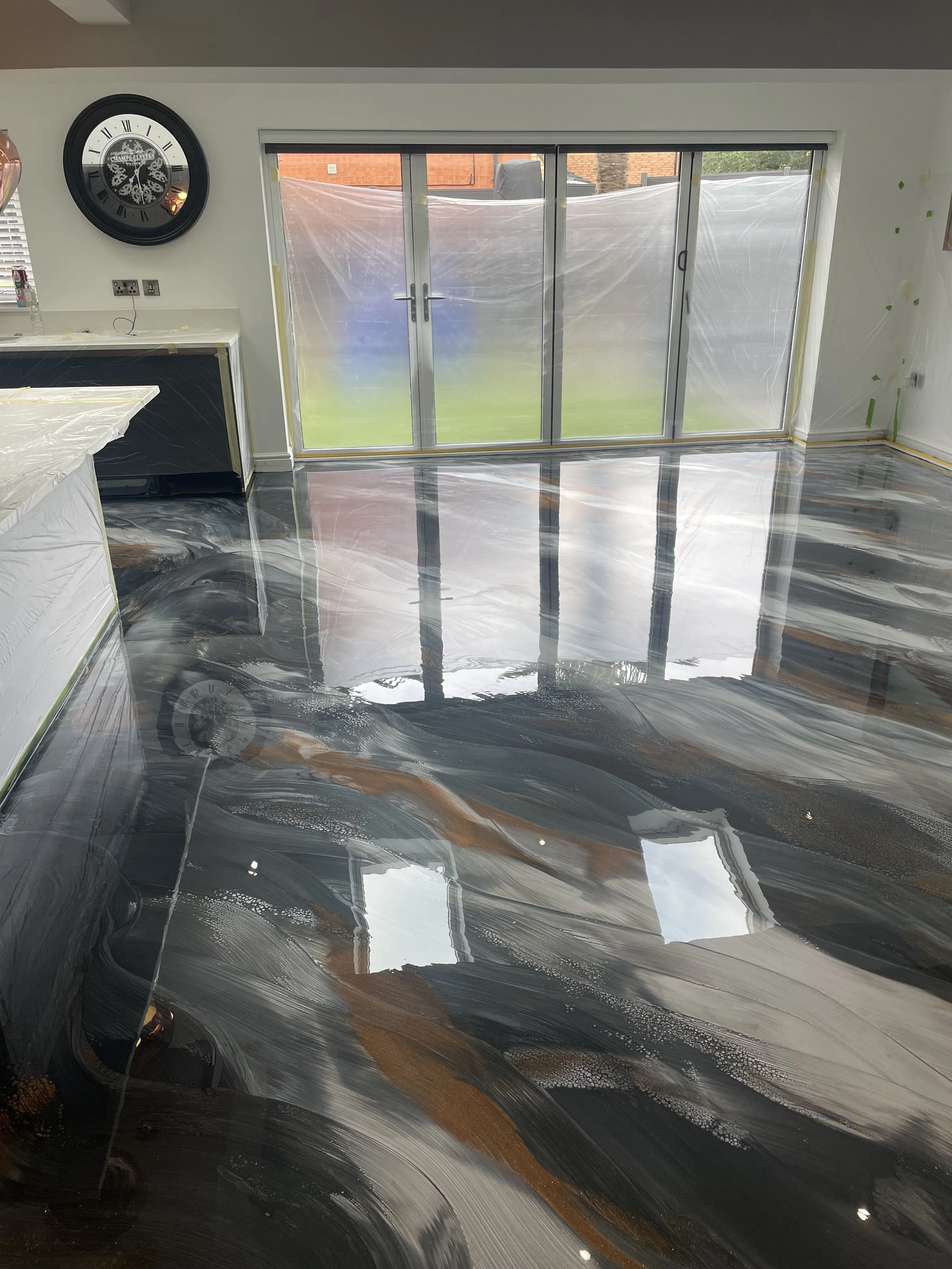
What Is Resin & Epoxy Flooring?
When people talk about resin flooring, epoxy resin flooring or resinous floors, they usually mean liquid-applied systems that cure into a seamless, hard-wearing surface. Unlike tiles, vinyl or laminate, there are no grout lines or joints – just one continuous floor that’s bonded to the concrete underneath.
Most systems are based on a blend of epoxy and resin components that react together when mixed. Once cured, they form a tough, chemical-resistant surface that can be engineered for slip resistance, gloss level and thickness. In homes, that might be a warm, modern resin kitchen floor; in a garage, a tough garage flooring system; and in commercial settings, decorative epoxy resin flooring designed to cope with heavy use.
Where Resin Floors Work Best
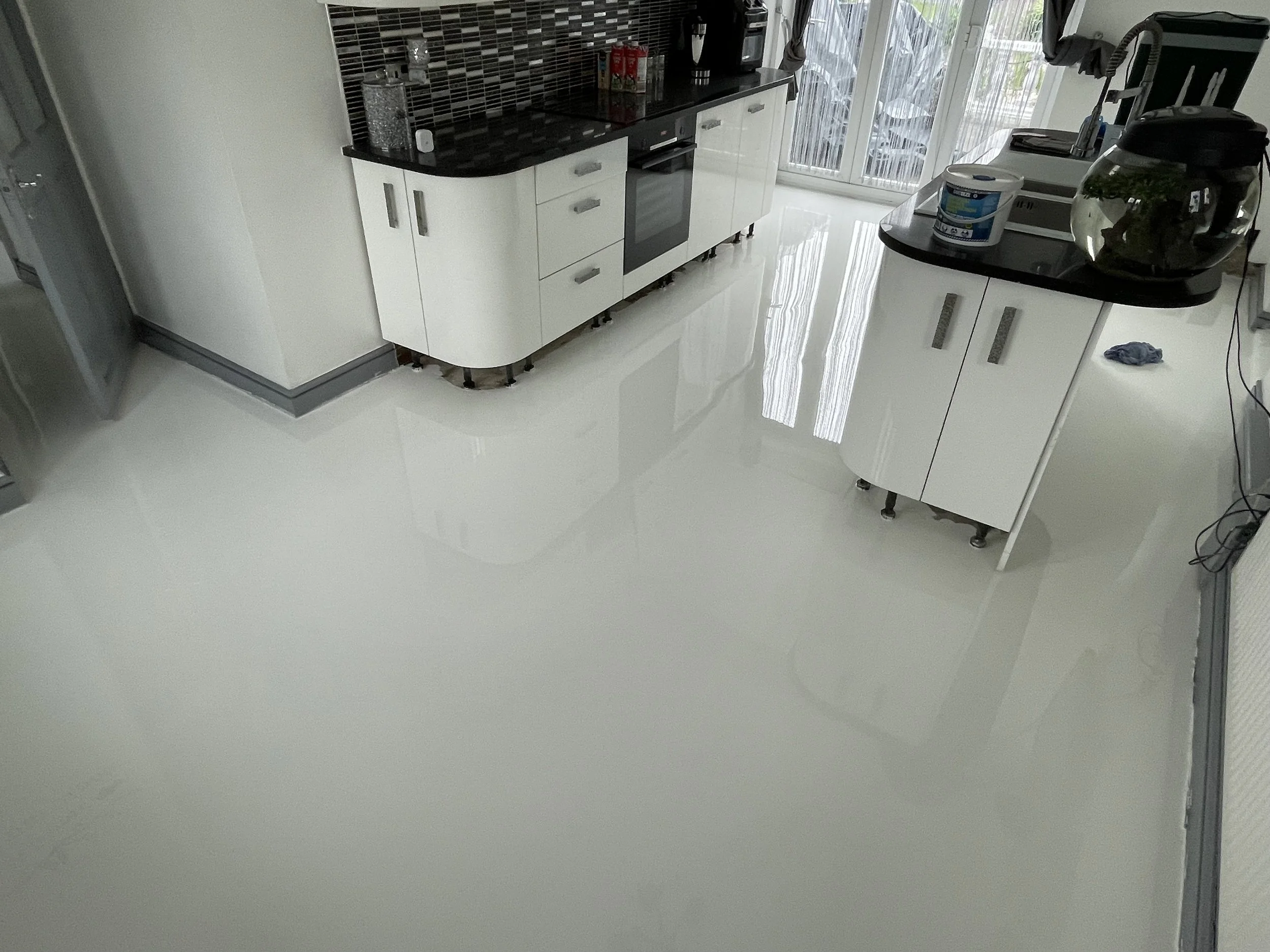
Whole Home Interiors
Resin floors work beautifully in modern homes where you want a continuous surface running through living spaces, kitchens, hallways and even bedrooms or wet rooms. A well-designed resin kitchen floor is warm underfoot, easy to clean and can be styled in soft neutrals or bolder tones to suit the rest of the interior.
Because there are no grout lines, these resinous floors are ideal for open-plan spaces where you want a calm, uncluttered look.
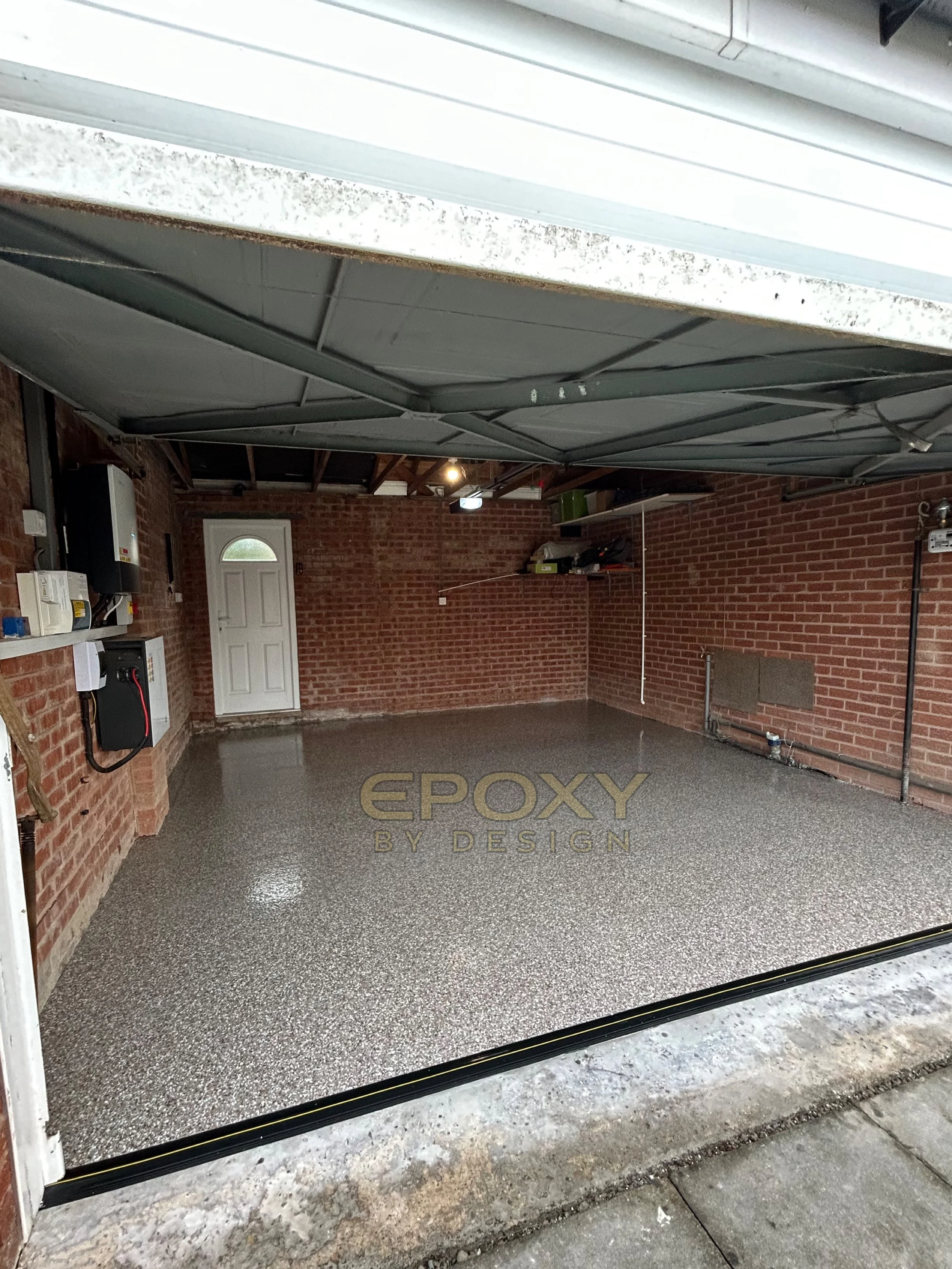
Garages & Home Workshops
A well-installed epoxy resin garage floor immediately upgrades a dusty concrete slab into a clean, bright space. Popular options include solid-colour garage epoxy floors, flake systems and high-impact metallic garage finishes.
Whether you call it a garage resin floor, garage flooring epoxy, or simply flooring for garages, these systems are designed to resist hot tyre pick-up, chemicals and day-to-day wear.

Commercial & Industrial Spaces
Shops, bars, restaurants, studios and light industrial units often choose epoxy flooring because it combines durability with design flexibility. A simple high-build system can keep a workshop easy to maintain, while decorative epoxy resin flooring in a hospitality venue becomes part of the brand experience.
Build-ups can be adapted for heavy traffic, forklift routes, chemicals or food-safe environments.
Types of Resin & Epoxy Floors
Not all resin for floors is the same. The right system depends on how the space is used, the condition of the concrete and how quickly you need to be back in action. Below are some of the main options you’ll hear about when planning a project.

High-Build Epoxy Coatings
A high-build coating is a thicker, more durable version of a basic paint. It’s ideal for workshops, plant rooms and some garage flooring projects where you want a clean, easy-to-wipe surface without going to full screed thickness.
With proper preparation and a good waterproof coating where needed, this can be a cost-effective way to protect concrete.

Decorative & Metallic Epoxy Floors
Decorative epoxy resin flooring uses pigments and techniques to introduce depth and movement into the surface. A metallic epoxy floor or dramatic metallic garage finish can create a real focal point, while softer marble-style looks suit calm, high-end interiors.
These systems are usually finished with clear top coats for gloss, satin or matt effects and extra protection.

Flake, Quartz & Fast-Cure Systems
Flake or quartz systems scatter coloured chips or aggregates into the resin, then seal them with clear coats. They’re popular for garage resin flooring, showrooms and high-traffic areas because they hide dust and minor marks well.
Polyaspartic and other fast-cure options are useful where downtime must be kept to a minimum.
Garage Resin Flooring
Choosing a Resin System for Garages
For garages, you want a system that can deal with vehicle weight, oil, chemicals and temperature swings. A properly specified epoxy resin for garage floors will usually include mechanical grinding, repairs, a primer and one or more build coats, rather than a single thin layer.
This approach creates a truly tough garage flooring solution that resists peeling and hot tyre lift far better than budget DIY products.
Popular Garage Floor Looks
Solid greys and charcoals remain the go-to choice for a smart, workshop feel. Flake systems add texture and help disguise dust. For clients who want something special, a metallic epoxy floor or statement metallic garage design can turn a simple flooring garage into a showpiece space.
Whatever the style, the build-up underneath is what really determines how long your garage epoxy floor lasts.
Key Terms in Garage Specs
You might see the same idea described in different ways – garage floors epoxy, garage floor flooring, resin garage floor or garage resin flooring. What matters is the preparation, thickness and quality of materials rather than the label.
Always ask your installer exactly what each layer does and how thick the final system will be.
Understanding Layers & Build-Ups
Good epoxy resin flooring is rarely just one coat. Most systems are built up in layers, each doing a specific job. Understanding these basics makes it easier to compare quotations and spot where corners might be being cut.
1. Surface Preparation
Concrete is ground or shot-blasted to remove weak laitance, open the pores and create a profile for the resin to key into. Cracks and defects are repaired and dust is controlled. Without this step, even the best epoxy and resin products can fail.
2. Primers & Scratch Coats
A primer helps the system bond to the substrate and can seal porous concrete. In some projects, a levelling or scratch coat is added to smooth out uneven areas, especially in decorative systems or where a coating waterproofing layer is needed.
3. Body Coats & Top Coats
The body coat builds thickness and strength. Pigments, flakes or metallic effects are usually introduced here. One or more top coats then provide the final finish and additional water proof coating properties, along with UV stability and slip resistance where required.
How to Choose the Right Resin Floor
It’s easy to feel overwhelmed by technical data sheets and brand names. Instead of focusing on product labels, start with how the space needs to perform. A good installer will then match the resin system to those needs.
Traffic, Use & Impact
Think about who and what will be on the floor. Is it family life with pets and kids, a single car, or a busy warehouse? The higher the load and traffic, the thicker and more robust the system should be.
Slip Resistance & Cleaning
In kitchens, wet rooms and commercial spaces, you may want extra texture built into the surface. At the same time, overly aggressive profiles can be harder to mop. A good specification balances safety and maintenance.
Colour, Style & Sheen
Do you prefer a soft matt look, a subtle sheen or a high-gloss finish? Would a simple block colour suit the space, or is there room for a feature zone in decorative epoxy resin flooring? These choices make a big difference to the overall feel of the room.
Working With Resin Flooring Installers
Whether you choose Epoxy By Design or are still comparing flooring installation contractors near me, it’s worth asking a few key questions. The answers will tell you a lot about how seriously they take preparation, design and aftercare.
Questions to Ask
- How will you prepare the existing floor?
- What is the full build-up, layer by layer?
- How thick will the finished system be?
- What happens if moisture is present in the slab?
Comparing Quotes
When looking at prices, check you’re comparing like with like. A quote that includes full grinding, crack repairs and multiple coats will naturally cost more than a simple roll-on sealer – but will perform very differently over time.
Aftercare & Maintenance
Ask what day-to-day cleaning should look like, which products to avoid, and whether the system can be refreshed or over-coated in future. Good resin flooring should be a long-term investment, not a short-term fix.
Resin Flooring FAQs
A few of the questions we’re most often asked when people are planning a new resin or epoxy resin garage floor, home interior or commercial project.
How long does a resin floor last?
With proper preparation and sensible cleaning, a good resinous floor can last many years. Garages and industrial areas may eventually need a new top coat, while lightly used interiors can stay looking fresh for a long time with basic care.
Is resin flooring waterproof?
Most systems are water-resistant once fully cured. In wet rooms, balconies or areas with frequent spills, your installer may specify additional waterproof coating or tanking measures as part of the build-up.
Will a resin floor crack?
Resin follows the movement of the slab beneath it. Existing cracks are usually chased out and filled, and any structural issues discussed before work starts. Correct preparation dramatically reduces the risk of visible cracking later.
Can you install resin over underfloor heating?
Yes, many epoxy flooring and polyurethane systems are suitable over properly commissioned underfloor heating. The key is to follow the heating cycle instructions and allow the slab to dry fully before installation.
Ready to Plan Your Resin Floor?
Whether you’re dreaming of a seamless home interior, a clean and practical epoxy resin garage floor or design-led decorative epoxy resin flooring for a commercial space, we can help you choose the right system, finish and specification for your project.