
Concrete Resin Flooring: The Complete UK Guide to Finishes, Costs & Installation
Concrete resin flooring has become one of the most requested home and business improvements across the UK in recent years, and it is easy to understand why once you see it in person. It transforms plain, cold concrete into a seamless, durable and genuinely attractive surface that suits everything from garages and kitchens through to warehouses and retail units. If you are considering resin flooring for a property in Leeds, York, Manchester or anywhere else across Yorkshire, this guide covers everything you realistically need to know before getting started and requesting quotes.
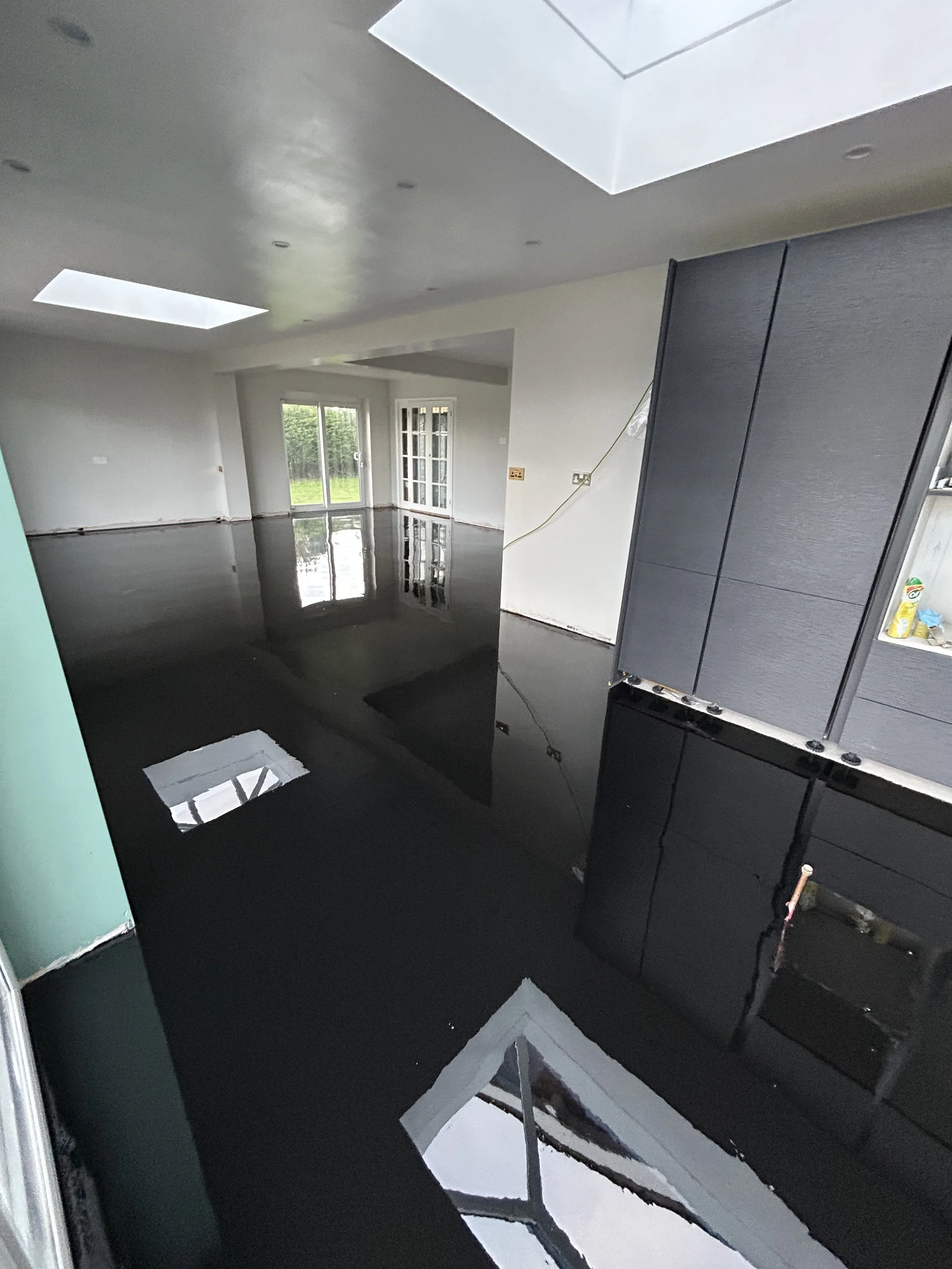
What Concrete Resin Flooring Actually Is
Concrete resin flooring is a system applied directly onto a properly prepared concrete substrate. Rather than covering the concrete with a completely separate material such as tile or carpet, resin bonds directly to the concrete itself, becoming a permanent, seamless part of the finished floor. The most common resin types used in the UK are epoxy and polyaspartic, though polyurethane and other specialist systems exist for specific applications such as areas with heavy chemical exposure or extreme temperature variation.
Popular Finishes Available
Solid Colour
A single, flat colour finish is typically the most cost effective option available and suits garages, workshops and utility spaces well, where a clean, uniform look is generally the main priority over a more elaborate decorative effect.
Metallic Epoxy
Metallic pigments are mixed into the resin and manipulated by hand during application to create swirling, marbled or ocean like visual effects. This finish has become extremely popular for feature floors in homes and higher end commercial spaces, since no two metallic floors ever turn out quite the same, giving every installation a genuinely unique appearance.
Flake Systems
Coloured vinyl flakes are broadcast into the wet resin and then sealed underneath a clear protective topcoat, creating a textured, multi tone finish that hides everyday dirt and adds useful slip resistance underfoot. Flake flooring is a firm favourite for garages, showrooms and commercial spaces that need both good looks and genuine everyday practicality in equal measure.
Quartz Broadcast
Similar in concept to flake flooring but using coloured quartz granules instead of vinyl flakes, this finish is particularly popular in commercial and retail settings where a durable, slightly textured surface is required to cope with heavy footfall.
High Build Systems
For industrial and warehouse environments, a considerably thicker, high build resin system provides much greater impact resistance and abrasion resistance to cope with forklift traffic, heavy machinery and dropped goods.
The Installation Process Step by Step
Site Survey and Consultation
A proper installation always begins with a site visit to assess the existing concrete condition, check moisture levels, and understand exactly how the space will be used going forward. This assessment determines which resin system and which finish will genuinely perform best for that particular property.
Surface Preparation
This stage is by far the most critical part of the entire installation process. The existing concrete is diamond ground to remove any previous coatings, laitance or surface contamination, and to open up the surface pores so the new resin can bond properly. Cracks, holes and uneven areas are repaired at this stage before anything else happens. Moisture testing is also carried out, since excess moisture trapped within the slab can cause coatings to fail prematurely if it is not properly identified and addressed beforehand.
Priming
A primer coat is applied to seal the prepared concrete surface and provide a strong bonding layer for the resin system that will follow on top of it.
Base Coat Application
The main resin layer is applied at this stage, with colour pigments, metallic effects or flake broadcast added depending on the specific finish that has been chosen for the project.
Topcoat and Sealing
A clear protective topcoat is then applied to seal and protect the finish underneath, add the desired level of gloss or matte sheen, and build in the required level of slip resistance appropriate for how the space will be used.
Curing
Depending on the particular resin system chosen, curing can take anywhere from a few hours with polyaspartic through to several days with standard epoxy before the floor is genuinely ready for full, unrestricted use.
Costs to Realistically Expect
Resin flooring costs across the UK vary considerably based on several distinct factors. The overall size of the area being coated plays an obvious role, as does the condition of the existing concrete and how much preparation and repair work is genuinely needed before installation can begin.
The resin system chosen also affects price significantly, with polyaspartic typically costing more than standard epoxy per square metre. The specific finish selected matters too, since metallic and flake systems generally cost more than a plain solid colour finish, reflecting the additional materials and labour involved. Any additional requirements such as coved skirting, drainage integration or an enhanced level of slip resistance for commercial settings will also add to the final cost.
Because floor condition has such a significant impact on the final price of any project, it is always worth arranging a proper site survey rather than relying on a generic online estimate that cannot account for the specific condition of your property.
How Long Does Resin Flooring Actually Last?
A properly installed and well maintained resin floor typically lasts well over a decade, with many commercial installations performing reliably for fifteen to twenty years before a full recoat becomes necessary. Longevity depends heavily on the quality of the original preparation work, the specific resin system used, and how well the floor is maintained afterwards, which is a topic we cover in considerably more detail in our dedicated maintenance guide elsewhere on our site.
Resin Flooring for Different Types of Spaces
Homeowners across Yorkshire choose resin flooring for kitchens, utility rooms, living spaces and garages, valuing the seamless, easy clean surface and the warmth it brings compared with cold tiles or bare concrete underfoot. Commercial and retail businesses value the durability and professional appearance resin flooring provides, along with the relative speed of installation compared with alternatives such as new tiling. Industrial operators value the load bearing capacity and chemical resistance that heavier duty resin systems can provide in demanding warehouse and factory environments.
Choosing the Right Installer for Your Project
Resin flooring is a genuinely skilled trade, and the difference between a properly installed floor and a poorly prepared one is enormous in terms of both appearance and longevity. Poor surface preparation is by far the most common cause of coating failure, typically showing up as peeling, bubbling or flaking within months rather than years of installation. Look for an installer with a strong portfolio of completed projects, clear communication about the preparation process involved, and genuine hands on experience across the specific finish you have in mind for your project.
Getting Started With Your Project
At Epoxy By Design, we install concrete resin flooring across Leeds, Manchester, York, Bradford, Wakefield, Harrogate, Wetherby, Sheffield, Nottingham, Liverpool and Stoke-on-Trent, covering homes, garages, commercial premises and industrial units of every size. Get in touch with our team for a free site survey and a quote genuinely tailored to your space and how you plan to use it.
