
Why Polyaspartic Flooring Is Taking Over Garage & Showroom Floors in the UK
A few years ago, epoxy was almost always the automatic answer whenever someone asked about garage or showroom flooring in the UK. That picture is changing quickly. Polyaspartic coatings have moved from a niche, premium option into one of the most requested systems we install across Leeds, Manchester and Yorkshire more broadly, and the reasons come down to a handful of genuinely practical advantages that matter to real garage owners and showroom operators, not just marketing claims.
What Polyaspartic Flooring Actually Is
Polyaspartic is a type of aliphatic polyurea coating, chemically distinct from traditional epoxy resin. It was originally developed for industrial and automotive applications where extremely fast cure times and high durability were essential requirements. Over the past several years it has become far more widely available for residential and commercial garage flooring across the UK, and improvements in application technique among specialist installers have made it accessible for a much broader range of projects than was previously the case.
The Speed Advantage Explained
The single biggest reason polyaspartic has surged in popularity is cure time. Traditional epoxy floors typically need somewhere between one and three days to cure sufficiently before the space can be walked on safely, and up to a week before the floor reaches full chemical resistance. Polyaspartic coatings, by contrast, can often be walked on within a matter of hours and driven on within a day, depending on the specific product used and the conditions on site at the time of installation.
For a busy family that relies on their garage every day, or a car showroom that simply cannot afford to close its doors for an entire week, this difference in cure time is genuinely significant. A polyaspartic installation can often be completed and back in use within a single working day for smaller garage spaces, compared with the multi day disruption that a traditional epoxy installation typically involves from start to finish.
Built With UK Weather in Mind
Polyaspartic coatings are generally more resistant to ultraviolet light than standard epoxy. Epoxy floors, particularly those finished with a clear topcoat, can gradually yellow or amber when exposed to sunlight over months and years, an effect that becomes especially noticeable in garages with windows or doors that are frequently left open during daylight hours. Polyaspartic resists this yellowing considerably better, keeping colours truer and more consistent for much longer.
Polyaspartic is also more flexible than epoxy once fully cured. UK concrete slabs expand and contract naturally with seasonal temperature swings between summer and winter, and this ongoing movement can eventually cause more rigid coatings to crack at existing joints or other stress points. The added flexibility built into polyaspartic helps the coating move together with the concrete rather than fighting against it, which reduces the likelihood of cracking developing over time.
Better Resistance to Hot Tyres
Anyone who has parked a car with warm tyres directly onto an epoxy garage floor may have noticed slight softening or marking appearing at the contact points, an effect sometimes referred to as hot tyre pick up. Polyaspartic coatings resist this considerably better due to their underlying chemical structure, which makes them a strong choice for active garages where cars come and go on a daily basis, or showrooms where vehicles are frequently repositioned across the floor.
The Case for Showroom Flooring
Car showrooms and dealerships across Manchester, Leeds and Sheffield have particular reasons to favour polyaspartic flooring over more traditional options. Showroom floors need to look genuinely immaculate under bright display lighting, resist constant vehicle movement throughout the working day, and ideally be installed with minimal disruption to ongoing trading. The fast cure time of polyaspartic means a showroom floor can often be refreshed section by section over a single weekend rather than requiring an extended closure that would affect sales.
The strong UV stability of polyaspartic also matters more in showroom environments than in a typical home garage, since large glass frontages are extremely common in dealership design and expose the floor to significant daylight throughout most of the day, every day of the year.
Is Polyaspartic Always the Right Choice?
Polyaspartic is not automatically the better option for every single project. It typically costs more per square metre than standard epoxy, and the fast cure time that makes it so convenient for busy garages and showrooms also means it can be somewhat less forgiving to apply correctly, requiring genuinely skilled, experienced installers who understand the shorter working window involved. For budget conscious residential garages with no particular time pressure to reopen quickly, a well specified epoxy system can still deliver excellent, long lasting results at a noticeably lower overall cost.
The right choice ultimately comes down to your own priorities for the space. If speed, UV stability and flexibility matter most to your particular project, polyaspartic is very likely worth the additional investment. If budget is the primary concern and a few days of downtime genuinely is not an issue for your household or business, epoxy remains a proven and thoroughly reliable option that has served UK garages well for many years.
Combining Polyaspartic With Flake
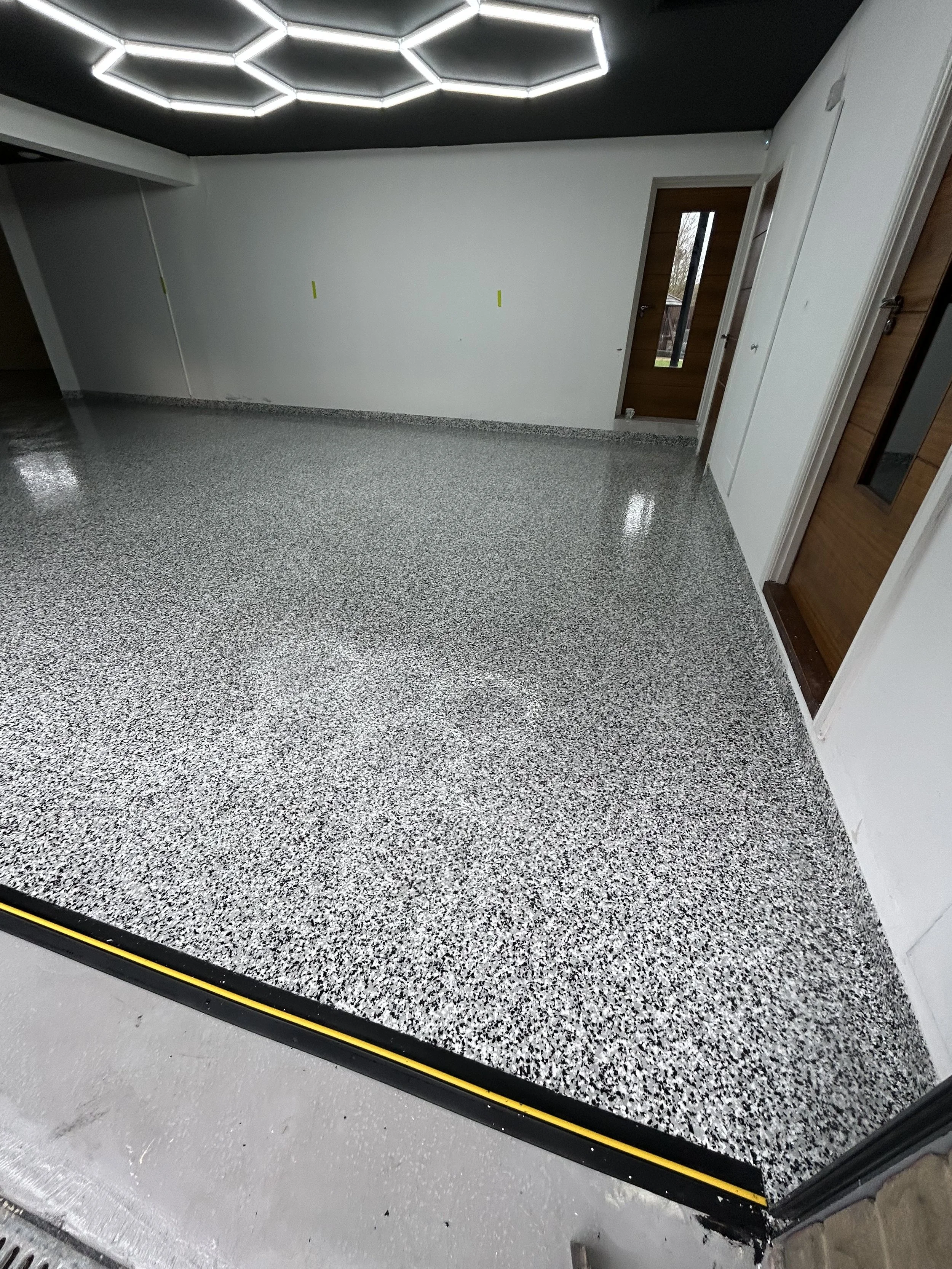
Many of the showroom and garage projects we complete across Yorkshire now combine a polyaspartic base coat with a decorative flake broadcast layer, bringing together the speed and durability benefits of polyaspartic with the textured, dirt hiding appearance and added underfoot grip that flake naturally provides. This combination has become one of our most frequently requested garage flooring systems, particularly among customers who want both a fast turnaround and a genuinely impressive finished appearance.
Getting Polyaspartic Installation Right
Polyaspartic flooring rewards genuinely skilled installation. The fast cure time leaves very little room for error during application, and proper concrete preparation remains just as critical here as it is with any other resin system, arguably more so given the shorter working window available to the installer. Working with an experienced contractor who regularly and confidently works with polyaspartic, rather than one occasionally trying it for the first time on a live project, makes a real and noticeable difference to the finished result you end up with.
A Practical Comparison at a Glance
For those weighing up the two systems side by side, epoxy generally offers a lower upfront cost and a huge range of decorative finish options, but requires a longer cure time and can be more prone to UV yellowing over the years. Polyaspartic generally offers a much faster turnaround, stronger UV stability and better flexibility, but comes at a higher price point and requires a more experienced installer to apply correctly within its shorter working window.
Speak to a Specialist
At Epoxy By Design, we install polyaspartic garage and showroom flooring across Leeds, Manchester, York, Bradford, Wakefield, Harrogate and beyond, alongside our traditional epoxy systems, so we can advise honestly on which option genuinely suits your specific project rather than pushing a single product regardless of fit. If you are weighing up epoxy against polyaspartic for your next garage or showroom project, get in touch with our team for tailored advice and a free, no obligation quote.
