
Commercial Epoxy Floor Maintenance: How to Protect Your Investment and Cut Long-Term Costs
A commercial epoxy floor represents a genuine investment in your business premises, and like any part of a building, it performs best and lasts longest when it receives a reasonable amount of ongoing care. Businesses across Leeds, Manchester, Sheffield and Nottingham often assume epoxy floors are entirely maintenance free once installed. They are certainly low maintenance compared with carpet or tiles, but a small, consistent amount of care makes an enormous difference to how long the floor keeps looking and performing like new.
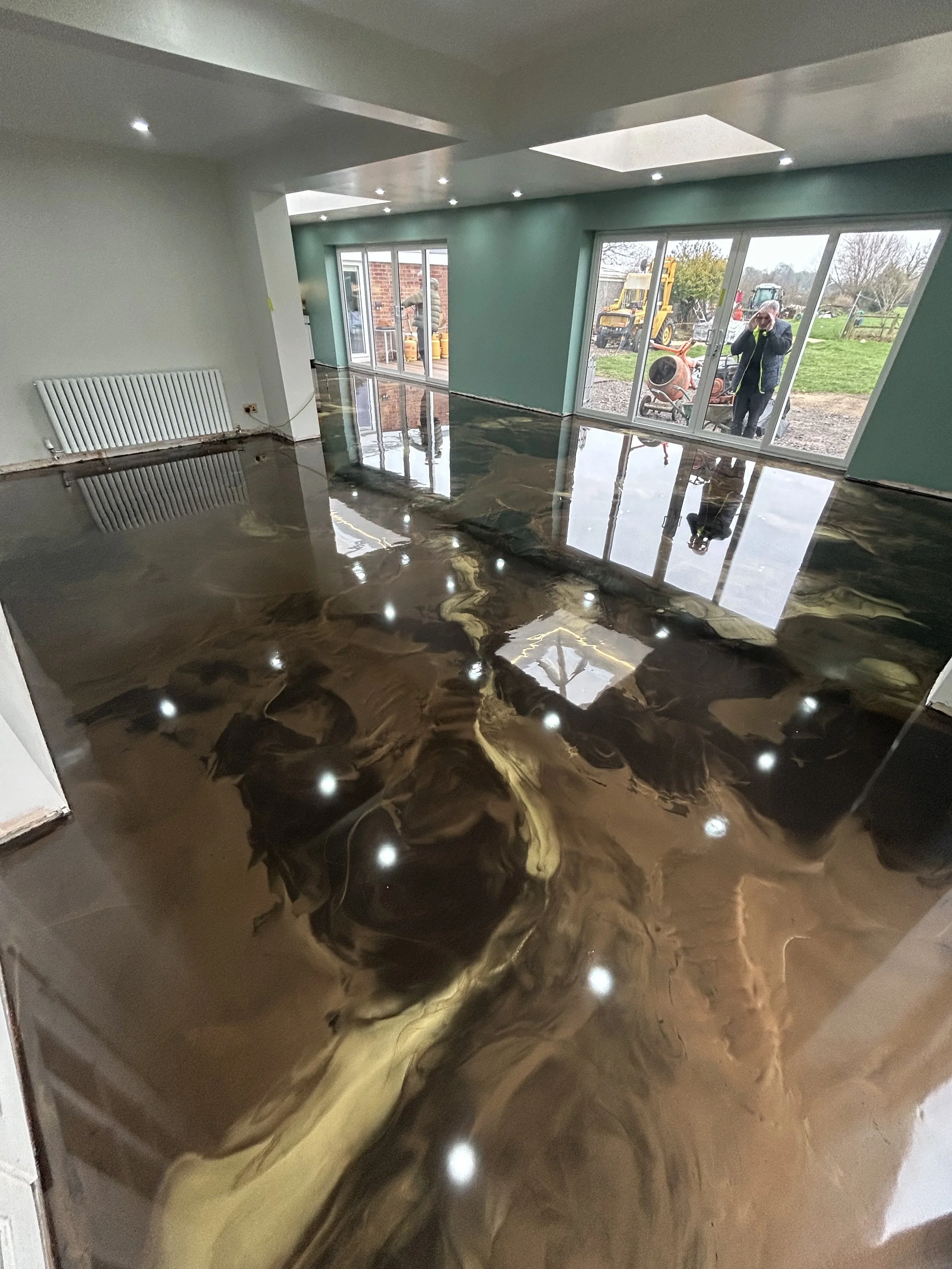
Why Maintenance Matters More Than Most People Expect
Epoxy resin flooring is tough, but it is not indestructible. Grit dragged in on shoes, forklift wheels or trolley traffic acts like fine sandpaper over months and years, gradually dulling the glossy surface finish. Chemical spills left unattended can etch or discolour the topcoat if they are allowed to sit for extended periods. Ultraviolet exposure through windows or roof lights can cause gradual yellowing in certain resin systems, particularly older or lower grade epoxy products.
None of these issues cause sudden or dramatic failure on their own, but they accumulate steadily, and a floor that could easily have lasted fifteen years with proper care might need a full recoat after only five or six years without it.
Daily and Weekly Cleaning Routines
The genuinely good news is that day to day maintenance for epoxy floors is straightforward and does not require specialist skills. Regular sweeping or dust mopping to remove loose grit prevents the abrasive wear that gradually dulls the surface finish over time. For wet cleaning, a soft mop combined with a pH neutral cleaning product designed specifically for resin floors tends to work best. Harsh acidic or highly alkaline cleaning chemicals can degrade the protective topcoat over time, so it is well worth checking product labels rather than assuming any general purpose cleaner is automatically suitable for a resin surface.
In busy commercial and industrial environments, proper entrance matting at every external door makes a far bigger difference than most business owners initially expect, since a large proportion of the grit and moisture that damages floors is tracked in from outside within the first few metres of an entrance point.
Dealing With Spills Quickly and Properly
Epoxy resists most common chemicals and liquids reasonably well over the short term, but prolonged exposure, particularly to oils, solvents and certain cleaning agents, can eventually affect the surface finish if left unattended. Training staff to wipe up spills promptly rather than leaving them until the end of a shift protects the floor and simultaneously reduces slip risk for everyone using the space.
Preventing Physical Damage to the Floor
Heavy equipment, dropped tools and dragged furniture are all common causes of chips and gouges in commercial epoxy floors. Where equipment is regularly moved around, protective mats or pads placed under legs and wheels reduce point loading on the floor considerably. In warehouse and industrial settings, clearly marking out forklift routes and designated loading areas helps concentrate wear into specific zones that can be monitored more easily and, if needed, reinforced with a heavier duty topcoat in future.
Recognising Early Warning Signs of Wear
Catching problems early is genuinely the key to cost effective, low disruption maintenance. It is worth watching for a number of specific warning signs. Dulling or matte patches appearing in high traffic zones are often the very first sign that the topcoat is wearing thin in that area. Small chips or hairline cracks, particularly near doorways, machinery bases or racking legs, can indicate localised stress points that are worth addressing before they spread further. Discolouration or staining that does not clean off using normal methods may point to chemical exposure that has begun to affect the resin itself. Any lifting or bubbling at floor edges or around drains can indicate moisture getting underneath the coating, which tends to worsen over time if left unaddressed.
Addressing these issues promptly with a straightforward, localised repair is almost always considerably cheaper than waiting until the problem spreads and eventually requires a full recoat of the entire floor.
Periodic Deep Cleaning and Resealing
Beyond routine daily cleaning, most commercial epoxy floors benefit from a periodic deep clean and reseal, typically carried out every few years depending on the level of traffic the floor experiences. A professional deep clean removes ingrained grime that regular mopping simply cannot shift, while a fresh topcoat restores gloss, slip resistance and chemical resistance to something much closer to the original installation. This process is far less disruptive and considerably cheaper than a full floor replacement, and it significantly extends the working life of the original installation as a result.
For high traffic commercial kitchens, warehouses and retail environments across Yorkshire and the North West, we generally recommend arranging a professional inspection every twelve to eighteen months so that wear can be caught and addressed before it develops into a costly repair.
The Real Cost of Neglect
Businesses sometimes delay routine maintenance in order to avoid short term disruption or expense, but the long term costs of neglect are almost always considerably higher in the end. A floor that has been allowed to degrade significantly often needs full removal and complete reinstallation rather than a straightforward reseal, which multiplies both the cost and the amount of downtime involved compared with catching the same issue early. Regular, relatively modest maintenance spending protects a business against this much larger expense further down the line.
Building Maintenance Into Your Facilities Schedule
Rather than treating floor care as a one off afterthought whenever a problem becomes visible, many of our commercial clients across Leeds, Wakefield, Bradford and beyond now build epoxy floor maintenance into their regular facilities management schedule alongside other routine building upkeep. This approach gives predictable, budgeted costs, extends the life of the original installation considerably, and avoids the disruption and expense of emergency repairs during otherwise busy trading periods.
Practical Maintenance Checklist
A simple, practical routine for most commercial premises would include daily sweeping or dust mopping to remove loose grit, prompt wiping of any spills as they occur, weekly damp mopping using a pH neutral cleaner suited to resin floors, periodic checks of high traffic zones and entrance areas for early signs of wear, and a professional inspection and, where needed, reseal on a cycle appropriate to how heavily the floor is used. Following even this basic routine consistently makes a measurable difference to the lifespan of a commercial resin floor.
Working With a Maintenance Partner
At Epoxy By Design, we offer inspection, cleaning, repair and resealing services for commercial and industrial epoxy floors across Yorkshire and the North of England, working with businesses to build maintenance plans that suit how their premises are actually used day to day. If your floor is already showing signs of wear, or you simply want a sensible maintenance plan in place to protect your original investment, get in touch with our team for a proper assessment and honest advice on the best way forward.
