
Epoxy Flooring for Restaurants, Pubs & Cafés: What You Need to Know (UK Regs Included)
Hospitality flooring has to do a lot of jobs simultaneously. It needs to survive constant footfall, spilled drinks, hot fat, harsh cleaning chemicals and heavy equipment being wheeled across it every single day, while still looking presentable to paying customers. For restaurants, pubs and cafés across Leeds, Manchester, York and beyond, epoxy resin flooring has become the standard choice, and UK health and safety regulations play a significant part in why.
Why Hospitality Venues Choose Epoxy Over Alternatives
Traditional flooring options like ceramic tiles, vinyl or painted concrete all carry weaknesses in a busy kitchen or bar environment. Tiles crack under heavy trolley traffic and their grout lines trap grease and bacteria that are difficult to fully clean out. Vinyl can lift at the edges when exposed to prolonged moisture or heat near cooking equipment. Painted concrete wears through within months under the daily abuse of a working kitchen.
Epoxy resin flooring addresses these problems with a seamless, jointless surface that gives bacteria, grease and liquid nowhere to hide. It withstands hot oil spills, resists most cleaning chemicals used in commercial kitchens, and can be walked on constantly without significant visible wear for many years when it has been installed correctly by an experienced contractor.
UK Regulations You Need to Know About
Slip Resistance Requirements
Under the Health and Safety at Work etc. Act 1974 and the Workplace (Health, Safety and Welfare) Regulations 1992, employers have a legal duty to ensure floors are suitable for the conditions they will face, including taking reasonable steps to reduce the risk of slips where water, grease or other substances are likely to be present. Commercial kitchens sit firmly within this category, and the Health and Safety Executive treats slip risk in catering environments as a routine inspection point.
Slip resistance in the UK is most commonly measured using the Pendulum Test Value, a method preferred by the HSE because it can be carried out on site, in both wet and dry conditions, using a British Standard testing procedure. Readings are generally banded into three risk categories: a PTV below 25 is considered high slip risk, a PTV between 25 and 35 is considered moderate risk, and a PTV of 36 or above is considered low slip risk. For commercial kitchens specifically, most flooring specialists aim to achieve a PTV comfortably above 36 when tested wet, which is typically achieved in epoxy systems by broadcasting a fine aggregate or quartz media into the resin before the final seal coat is applied.
Food Hygiene Regulations
Kitchens preparing food for commercial sale fall under the Food Safety Act 1990 and the associated Food Hygiene Regulations, which require surfaces to be kept clean, in good repair, and constructed in a way that allows them to be effectively cleaned and, where necessary, disinfected. Seamless resin flooring meets this requirement well, since there are no grout lines, tile joints or gaps where food debris and bacteria can accumulate over time, unlike traditional tiled kitchen floors.
Coved skirting, where the resin floor curves upward at the wall junction rather than meeting the wall at a hard right angle, is also commonly specified in commercial kitchens. This detail removes the dirt trap that naturally forms at a standard floor to wall junction and makes jet washing and deep cleaning considerably more effective during routine cleaning schedules and environmental health inspections.
Chemical and Thermal Resistance
Commercial kitchens use strong degreasers, sanitisers and, in some cases, acidic cleaning agents on a daily basis. Standard epoxy holds up well against most of these products, but for particularly busy commercial kitchens we often recommend a heavier duty system incorporating additional chemical resistant topcoats. Thermal shock resistance also matters in areas close to fryers, ovens, steamers and dishwashers, where rapid temperature changes can place real stress on lesser flooring systems over time.
Front of House Flooring Considerations
While the kitchen area carries the strictest regulatory requirements, the front of house areas in restaurants, pubs and cafés benefit enormously from epoxy flooring too, just with a slightly different balance of priorities. Here, appearance often takes a more prominent role alongside durability, since customers spend their time looking at and walking across this part of the venue.
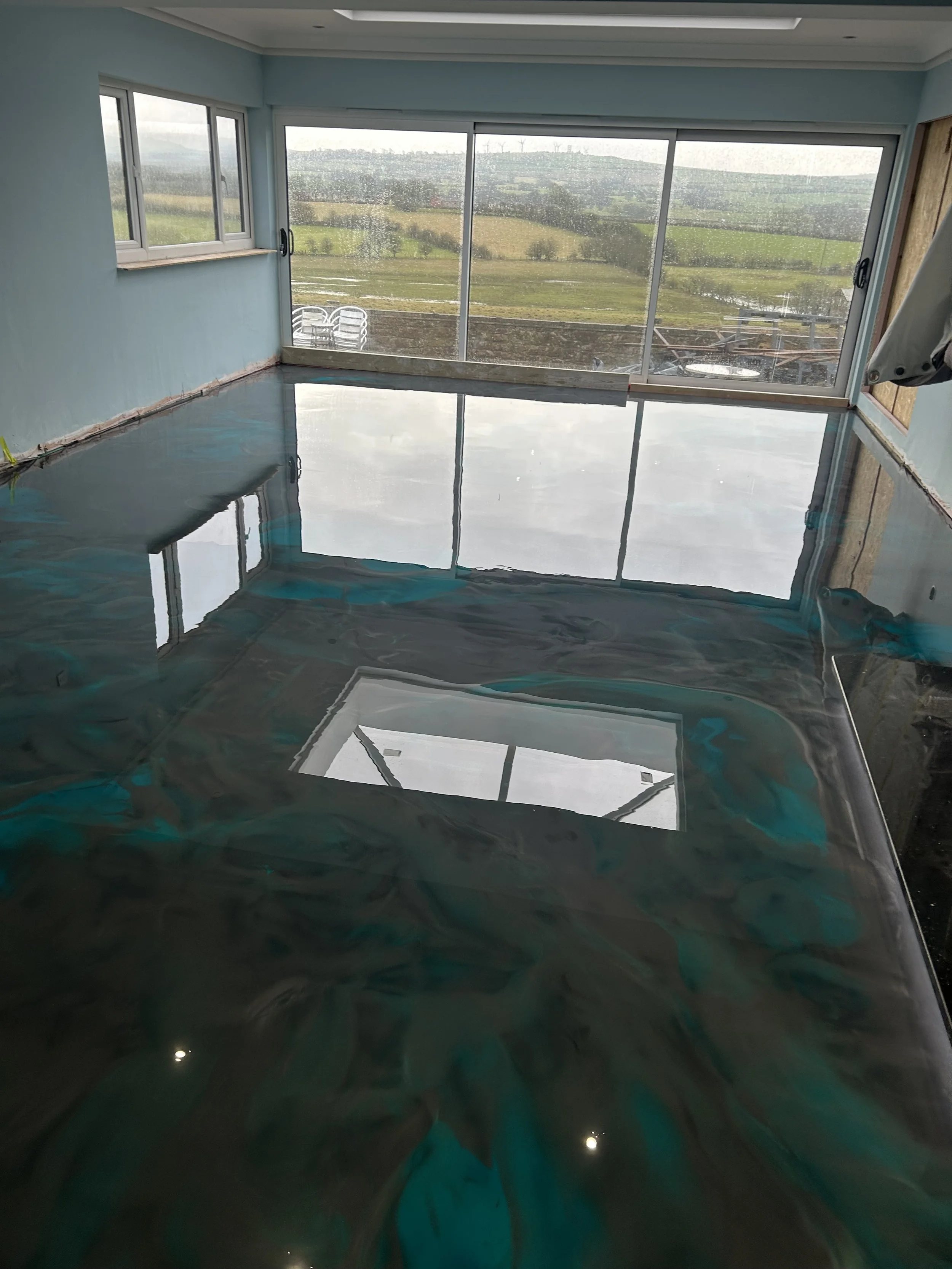
Decorative epoxy and metallic finishes allow pub and restaurant owners to create a distinctive look that reinforces their brand identity, something we have delivered on projects ranging from Doncaster to Manchester. Bar areas particularly benefit from resin flooring, since spilled drinks and constant staff and customer footfall are simply a daily reality of running a bar. A seamless, easy clean floor around the bar area reduces both slip risk and the time staff spend cleaning during a busy service.
Installation Around A Working Business
One of the biggest concerns hospitality owners raise before committing to a resin flooring project is downtime. Nobody wants their restaurant or pub closed for a full week during what might otherwise be a busy trading period. This is precisely where system choice matters most. Polyaspartic coatings cure far faster than standard epoxy and can often allow a kitchen to reopen within a day or two rather than a full week, which is a significant practical advantage for venues that genuinely cannot afford an extended closure.
We typically plan installations around quieter trading days wherever possible, and for larger venues we can phase the work section by section so that parts of the restaurant, pub or café remain fully operational throughout the project.
Maintenance and Longevity
A well installed commercial epoxy floor in a restaurant or pub setting should last well over a decade with proper ongoing care. Daily cleaning with appropriate, pH neutral detergents, prompt attention to any chemical or oil spills, and periodic professional deep cleaning and resealing all extend the lifespan of the floor significantly. We cover the specifics of this in more depth in our dedicated guide to commercial epoxy floor maintenance, which is worth reading alongside this one if you already have resin flooring installed.
Costs to Expect For Hospitality Flooring
Costs depend heavily on kitchen size, the condition of the existing floor, drainage requirements and the level of slip resistance and chemical resistance specified for the space. Coved skirting and drainage integration both add to the overall cost of a project but are frequently necessary for genuine compliance in a commercial kitchen setting. It is always worth arranging a proper site survey rather than relying on a generic quote, since kitchen layouts, drainage points and equipment positioning vary enormously from one venue to the next.
Working With A Flooring Specialist
Getting hospitality flooring right means carefully balancing regulatory compliance, day to day durability and overall appearance, all while minimising disruption to a trading business that relies on income every single day it is open. At Epoxy By Design, we have delivered resin flooring for pubs, cafés and restaurants across Leeds, Bradford, Wakefield, Sheffield, Nottingham and further afield, working closely with owners, chefs and kitchen designers to meet both HSE slip resistance guidance and food hygiene requirements throughout the project.
If you are planning a new fit out or need to replace failing kitchen or bar flooring, get in touch with our team for a free site survey and a quote tailored specifically to your venue and how it operates day to day.
