
The Ultimate Guide to Garage Floor Coatings UK (2026): Epoxy, Polyaspartic & Flake Compared
Anyone researching garage floor coatings in the UK this year quickly discovers there is no shortage of options. Epoxy, polyaspartic and flake systems all promise a tough, attractive finish, but they behave quite differently once installed, cure at different speeds, and suit different budgets and priorities. Whether your garage sits in Leeds, Manchester, York or Bradford, choosing the right system comes down to how you actually use the space, how quickly you need it back in service, and how much you want to spend.
At Epoxy By Design, we install all three systems across Yorkshire and the North of England, working on everything from everyday family garages to showpiece car storage spaces. This guide breaks down exactly how epoxy, polyaspartic and flake compare in 2026, so you can make an informed decision before getting quotes.
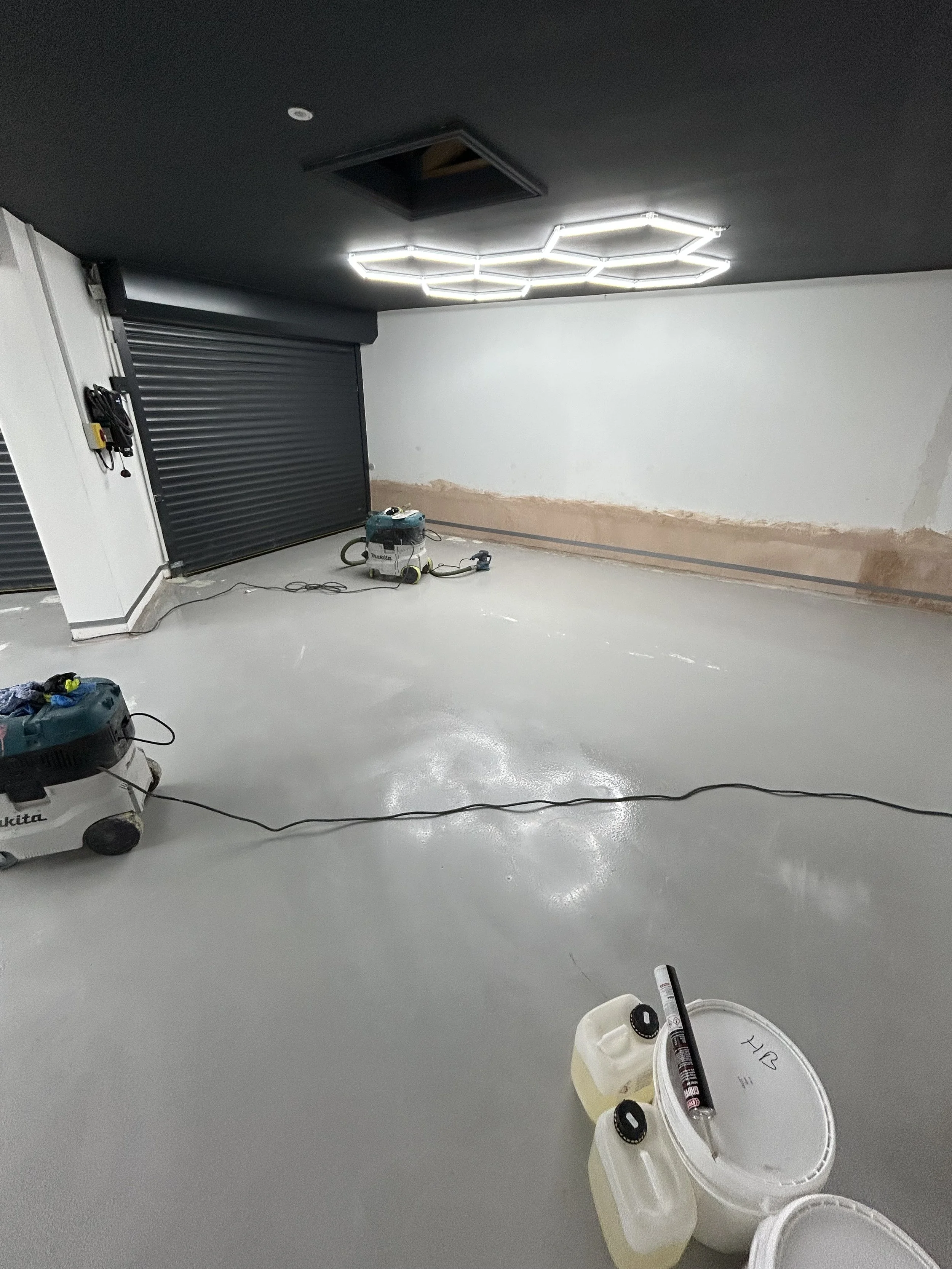
Why Garage Floors Need A Coating At All
Bare concrete garage floors are porous by nature. Over time they absorb oil, brake fluid, road salt and general moisture, staining permanently and gradually dusting as the surface breaks down under tyre traffic and foot traffic. Once concrete starts to dust, it becomes harder to keep clean and can even affect air quality in an enclosed garage. A properly installed resin coating seals the concrete surface, resists chemical spills, and creates a floor that is dramatically easier to sweep, mop and maintain. It also transforms the overall look and feel of the space, which matters if your garage doubles as a workshop, home gym, storage area, or a showroom for a car you are proud of.
Epoxy Garage Flooring Explained
Epoxy is the traditional choice and remains extremely popular across UK garages. It is applied as a two part liquid system, a resin and a hardener, that chemically react and cure into a hard, glossy, seamless surface. Properly prepared concrete allows epoxy to form a strong mechanical and chemical bond, giving excellent resistance to oil, brake fluid, most household chemicals and general abrasion from foot and vehicle traffic.
The main practical consideration with epoxy is cure time. Standard epoxy systems typically need somewhere between one and three days before the floor can be walked on safely, and full chemical and abrasion resistance can take up to a week to develop fully. This means planning ahead if your garage is in daily use.
Epoxy is also more sensitive to ultraviolet light than some newer resin systems. A clear epoxy topcoat exposed to direct sunlight through a window or an open garage door over months and years can gradually yellow or amber slightly. For most residential garages across Yorkshire this is a minor cosmetic issue rather than a functional problem, but it is worth knowing before you commit to a particular finish, especially in a garage with large windows or one that is frequently left open during the day.
On the positive side, epoxy systems are widely available in solid colours, metallic effects and decorative flake blends, giving homeowners in York, Harrogate and Wetherby plenty of scope to match a floor to their taste and the rest of the property.
Polyaspartic Coatings Explained
Polyaspartic flooring has grown rapidly in popularity across the UK garage market over the past few years. It is a type of polyurea coating, chemically distinct from epoxy, and it cures far faster, often within a matter of hours rather than days. For garage owners who cannot afford to have the space out of action for an extended period, this speed advantage alone often settles the decision.
Polyaspartic is also generally more resistant to ultraviolet light than epoxy, meaning it holds its colour better over time and is less prone to the amber tinge that can develop on some epoxy clear coats. This makes it a strong option for garages with plenty of natural daylight.
Another practical advantage is flexibility. Polyaspartic coatings tend to remain slightly more flexible once cured than epoxy, which helps them cope with the natural expansion and contraction that concrete slabs go through as temperatures swing between UK summers and winters. This reduces the likelihood of cracking at existing joints over the years. Polyaspartic also tends to resist hot tyre pick up better than epoxy, a common complaint where a warm tyre softens the coating slightly and leaves a visible mark once the car is moved.
The trade off with polyaspartic is cost. It is usually more expensive per square metre than a standard epoxy system, largely reflecting the specialist materials and the skill required to apply a fast curing product correctly. Many customers in Manchester and Sheffield still find the faster turnaround and long term colour stability worth the extra investment, particularly where the garage is used daily or doubles as a workshop.
Flake Flooring Systems Explained
Flake flooring is not a separate resin chemistry in its own right. Instead it is a decorative and functional layer that can be broadcast into either an epoxy or a polyaspartic base coat. Coloured vinyl flakes are scattered across the wet resin during application, then sealed underneath a clear protective topcoat once the base has set. The result is a textured, multi tone finish that does a much better job of hiding dust, minor dirt and tyre marks than a plain solid colour floor.
Flake systems also add a useful degree of slip resistance underfoot, which is a genuine safety benefit in a garage that regularly gets wet from cars coming in during rain, a common occurrence across Leeds, Bradford and Wakefield throughout much of the year. Flake floors have become particularly popular for showroom style garages and dedicated workshops, where both appearance and everyday practicality matter equally.
Comparing Costs Across Systems
Costs vary considerably depending on square footage, the condition of the existing concrete, and the specific system chosen, but as a general guide, standard solid colour epoxy tends to sit at the more affordable end of the market. Flake systems generally cost somewhat more, reflecting the additional materials and the extra labour involved in broadcasting and sealing the flake layer properly. Polyaspartic systems are typically the most expensive option per square metre, offset by faster installation and, for many owners, a longer service life before recoating is needed.
It is always worth arranging a proper site specific quote rather than relying on a generic online estimate, since the condition of your existing floor has a bigger impact on the final price than most people expect. A garage with cracks, historic oil staining or a failing older coating will need considerably more preparation work before any new resin system can go down safely.
Which System Should You Choose
If budget is the main priority and you can allow a few days for the floor to cure properly, standard epoxy remains an excellent, well proven choice that has stood the test of time in garages across the country. If you need the garage back in use quickly, or you particularly want maximum UV stability and flexibility, polyaspartic is worth the additional investment. And if you want a floor that hides everyday dirt, adds useful grip, and gives a genuinely professional showroom appearance, a flake system built on either an epoxy or polyaspartic base is very hard to beat.
Preparation Is Everything
Regardless of which system you eventually choose, the single biggest factor in how long your garage floor lasts is the quality of the surface preparation carried out before any resin is applied. Diamond grinding to open the concrete pores, careful moisture testing, and proper repair of any cracks or pitting all need to happen before the coating goes down. Skipping or rushing this stage is by far the most common reason budget coatings and DIY attempts fail within a year or two, regardless of how good the resin product itself might be.
Get Expert Advice For Your Garage
At Epoxy By Design, we carry out a proper site survey on every garage before providing a quote, so you get a system that is genuinely suited to your space and how you use it, rather than a one size fits all price pulled from a website calculator. We install epoxy, polyaspartic and flake garage floors across Leeds, Manchester, York, Bradford, Wakefield, Harrogate, Wetherby, Sheffield, Nottingham, Liverpool and Stoke-on-Trent.
If you are ready to transform your garage floor in 2026, get in touch with our team for a free, no obligation quote and site survey, and we will help you choose the system that genuinely suits your garage.
