
Utility rooms, boot rooms and wet rooms are the hardest-working small spaces in the home. They deal with muddy boots, wet dogs, washing machine leaks, shower water and constant traffic in and out of the house. Many homeowners spend heavily on the kitchen and living areas, then put a cheap floor in these rooms, only to see it lift, stain or grow mould within a few years.
A seamless resin floor is one of the most practical upgrades you can make here. This guide explains why it works, how to choose the right finish for each room and what to plan for.
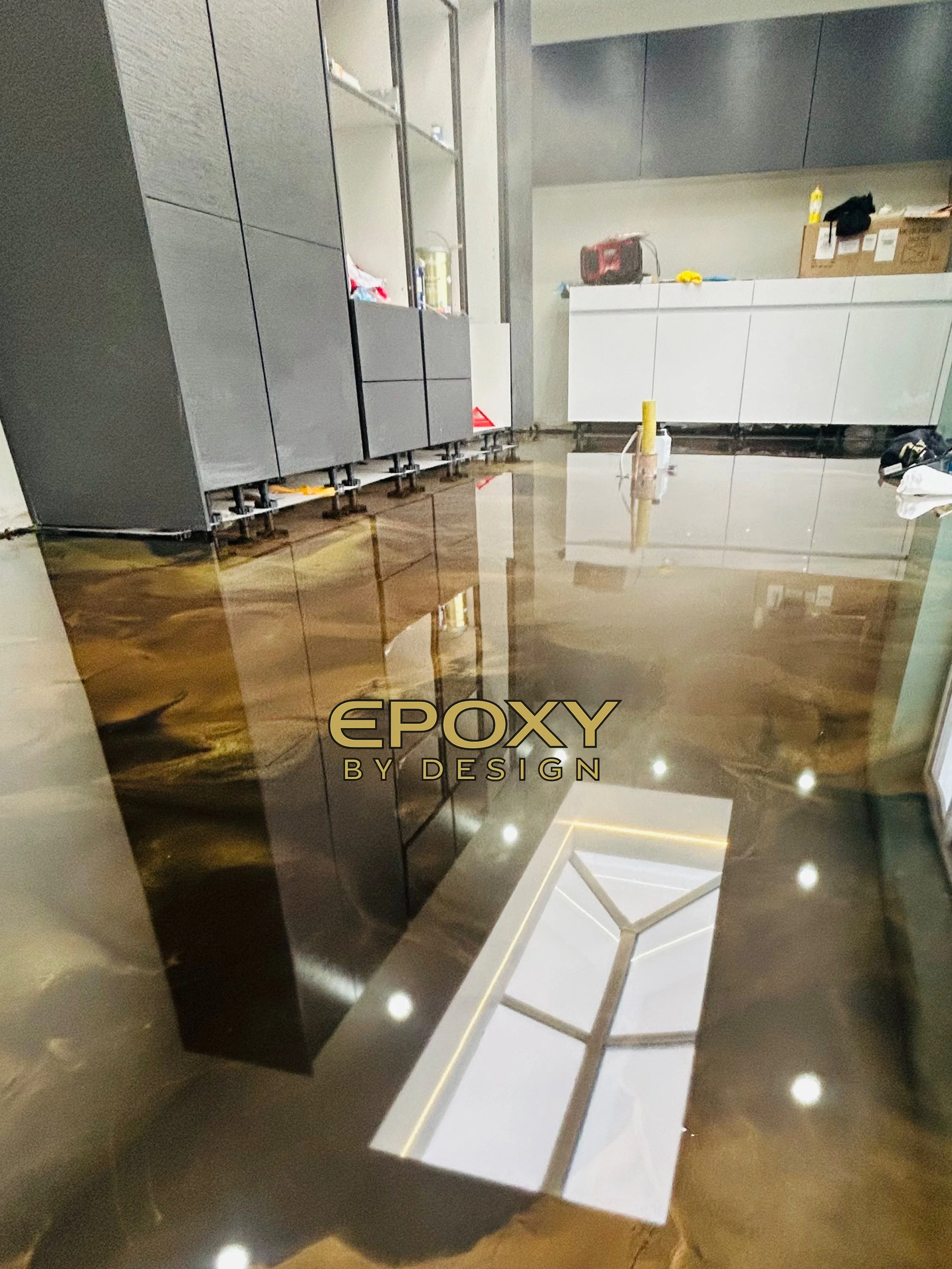
Why Resin suits Hard-working Rooms
Seamless and waterproof surface. Resin is poured as one continuous layer with no grout lines, joints or seams for water to get into.
Hygienic. With no joints to trap dirt, bacteria and mould have far fewer places to grow. That is why resin is standard in commercial kitchens and healthcare settings.
Easy to clean. Mud, sand, pet hair and detergent spills wipe or mop away.
Durable. Resin copes with heavy appliances, dropped tools and boots, dog bowls and the scrape of baskets being dragged across the floor.
Slip resistance built in. A textured anti-slip topcoat gives grip where floors are often wet.
Resin flooring for utility rooms
The utility room houses the washing machine, tumble dryer and often a sink, so leaks and spills are inevitable. A slow washing machine leak can ruin laminate or rot a timber subfloor before anyone notices. A resin floor keeps water on the surface, where you can see it and mop it up.
What to consider
Coving. A resin cove that curves up the wall by around 100mm creates a tray effect. It contains leaks and removes the corner where dirt collects.
Finish. A satin finish with light anti-slip aggregate suits most utility rooms. It hides detergent marks and footprints better than gloss.
Colour. Mid greys and stone tones disguise everyday dust and fluff between cleans.
Flake option. A polyaspartic flake floor adds texture and hides marks even better, which is useful in busy family homes.
Resin flooring for boot rooms
The boot room is the first stop for muddy walkers, wet dogs, prams, bikes and sports kit. It needs a floor that shrugs off grit and water and can be cleaned in minutes.
What to consider
Grit resistance. Sand and small stones act like sandpaper on soft floors. Resin's hard-wearing topcoat resists this abrasion far better than vinyl or laminate.
Anti-slip texture. Wet boots and paws make anti-slip aggregate essential in a boot room.
Matt or textured finish. Mud and paw prints show far less on a textured, matt or flake finish than on high gloss.
Dog-friendly. If the boot room doubles as a dog-washing area, a coved resin floor with a floor drain makes hosing down and cleaning simple.
Resin flooring for wet rooms
In a wet room, the whole floor gets wet, so the floor build-up matters more than in any other room. A professionally installed resin system can create a stylish, seamless, walk-in shower floor with no tiles or grout to clean.
What to consider
Falls to the drain. The subfloor must be built with correct falls so water flows to the drain. Resin follows the shape of the screed beneath it, so the falls are set before the resin is laid.
Waterproofing. Wet rooms need a properly specified waterproofing (tanking) system. The resin system and drain detail must work together with it.
Drain detailing. The joint between the resin and the drain is the most important detail. It needs a compatible drain and careful installation.
Slip resistance. Anti-slip aggregate is essential. We match the texture to the space so it is grippy underfoot but still easy to clean.
Upstands and coving. Coving the resin up the walls removes the floor-to-wall joint where mould often starts.
Wet rooms also pair well with our bespoke floating resin sinks, giving a seamless, coordinated look throughout the bathroom.
Planning your installation
Survey. We check the subfloor, moisture levels and any existing falls or drains.
Preparation. Old flooring is removed and the substrate is ground and repaired. Wet rooms may need new screed laid to falls first.
Priming and resin layers. The resin system is applied in layers, with coving formed at the walls where specified.
Topcoat with anti-slip. A protective topcoat is applied in your chosen finish and grip level.
Curing. Most small rooms can take light foot traffic after about 24 hours. Appliances, water and full use return once the resin has cured, which your installer will confirm.
Small rooms are often completed quickly, so they are an ideal first resin project, or an easy addition when you are already having a kitchen or open-plan floor installed. Our resin flooring guide explains the different resin systems in more detail.
Frequently Asked Questions
Is resin flooring fully waterproof?
A cured resin floor is non-porous and stops water soaking through the surface. In wet rooms, it still needs to be part of a correctly designed waterproofing system with falls and a suitable drain.
Is a resin floor slippery when wet?
It can be without texture. That's why we add anti-slip aggregate to the topcoat in utility rooms, boot rooms and wet rooms.
Can resin go over existing tiles in a utility room?
Often, if the tiles are well bonded and properly prepared. Grout lines need filling so they don't show through. A survey will confirm suitability.
Can resin go on a timber floor?
Timber moves and flexes, so standard resin systems aren't suitable directly on floorboards. A rigid, stable substrate such as screed or suitable boarding is needed first.
How do I clean a resin utility room floor?
Sweep or vacuum grit, then mop with warm water and a pH-neutral cleaner. Avoid harsh acids and abrasive pads.
Upgrade your hard-working rooms
Epoxy By Design installs seamless resin floors for utility rooms, boot rooms and wet rooms across Leeds, Harrogate, Bradford, York, Manchester and beyond. Contact us for a free consultation and quote, and we'll recommend the right system, finish and grip level for each room.
